
Drive
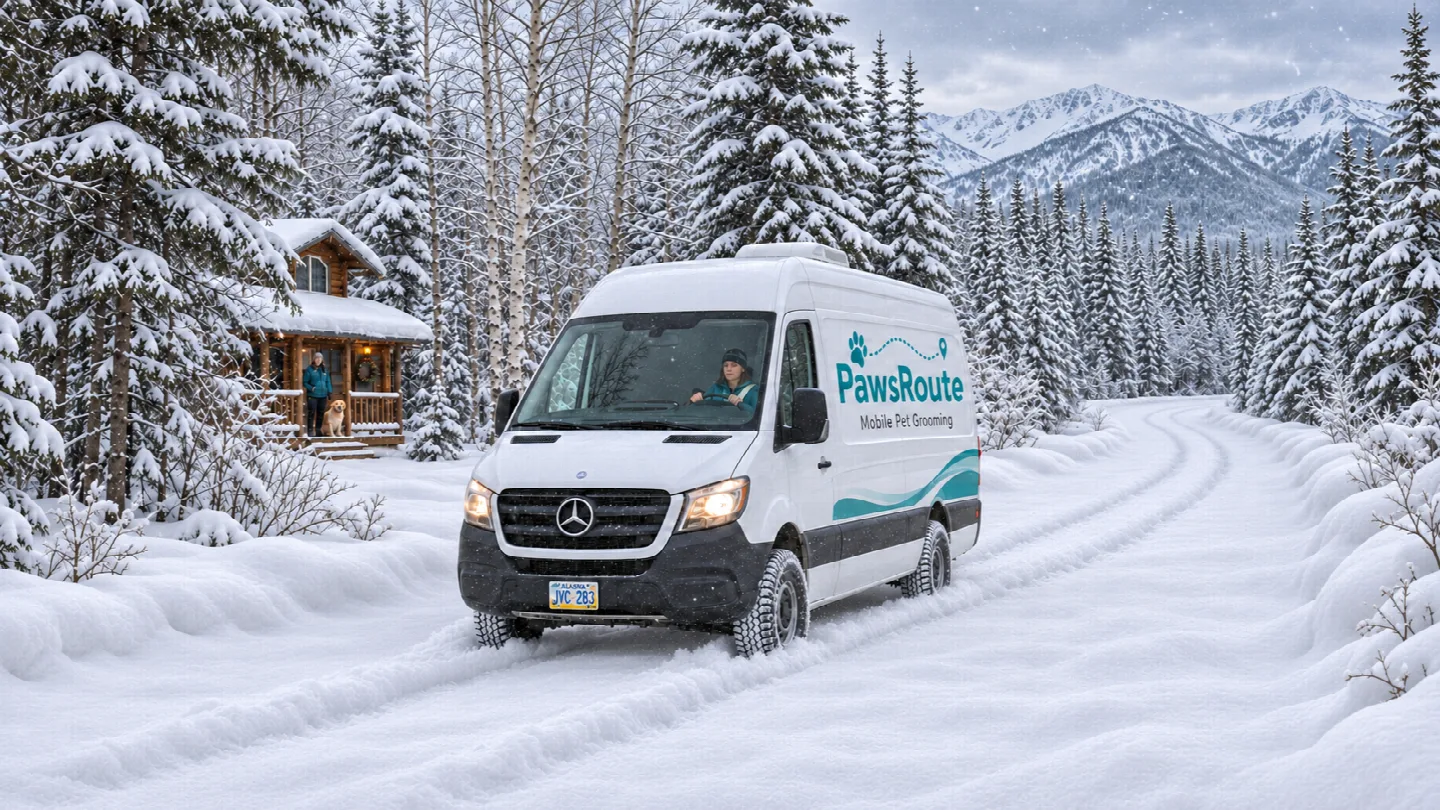
Roads and access are suitable, visibility is good, and your van’s heat, water, and power work. Add time between appointments.
Winter field guide
The Mobile Groomer’s Winter Safety Checklist
Should you run the route, start later, or call it off? Protect yourself, your van, and the pets in your care from the first driveway to the last handoff.
01 / Before you leave
Check the forecast for your whole route, including the return drive. Review local road reports and closures, not just the map’s traffic estimate. Then check the van and the last 50 feet to each client’s door.
Roads and access are suitable, visibility is good, and your van’s heat, water, and power work. Add time between appointments.
Wait if access hasn’t been cleared or conditions are changing. Set a time to reassess and tell clients when they’ll hear from you.
Don’t take a route through a closure or travel restriction, active icing, or poor visibility. Skip any stop without safe access, and stop work if the van can’t maintain a safe working environment.
National Weather Service: winter storm preparation · NHTSA: winter driving
02 / On the road
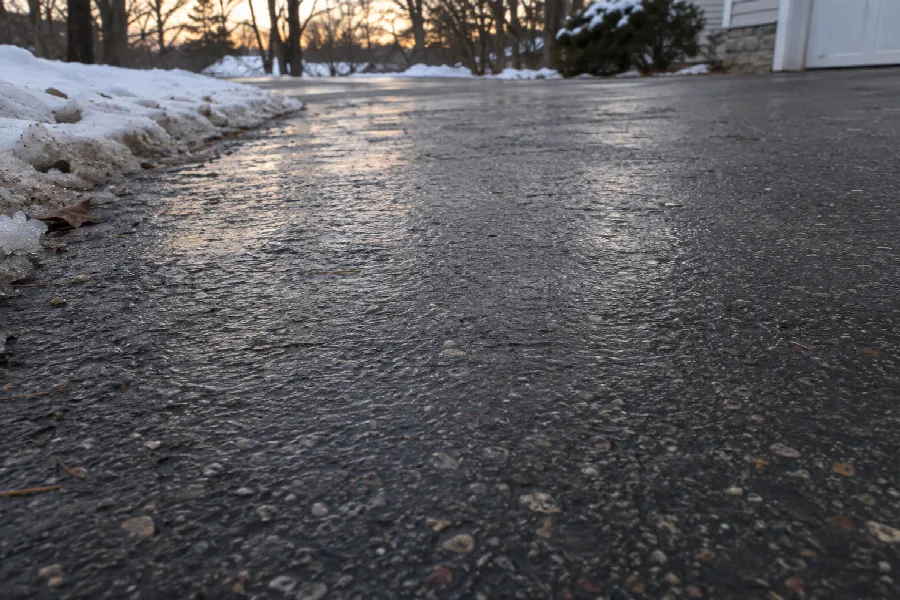
Black ice is a nearly transparent layer of ice. A slight sheen is possible, but you can’t reliably spot it by sight. Think about where meltwater can refreeze: bridges, shaded bends, and untreated driveways.
National Weather Service: black ice and refreezing · CDC: winter storm safety
03 / In the van
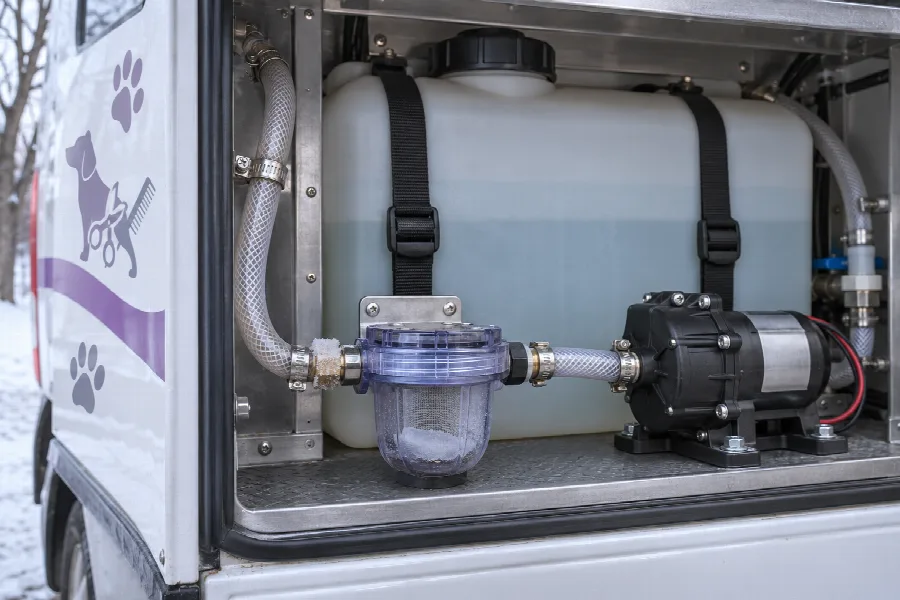
Before appointments, check the grooming bay and test the heat, hot water, water flow, and drainage. A tank may look fine even when the pump, strainer, hose, valve, or drain is frozen.
Model-specific examples: Wag’n Tails winterization · Hanvey winter preparation
04 / Carbon monoxide
Carbon monoxide (CO) has no smell or color. Clear snow from the tailpipe, and keep the conversion’s vents and exhaust outlets clear as directed by the builder. Test the van’s CO alarm as directed. Never run a portable generator inside the van or a garage, even with doors open. The CDC recommends running portable generators outdoors at least 20 feet from windows, doors, and vents. Follow the builder’s instructions for permanently installed equipment.
If the alarm sounds or you suspect exposure: get everyone, including pets, into fresh air immediately and call emergency services from outside. Don’t re-enter until responders say it’s safe. Contact an emergency veterinarian about any potentially exposed pet.
CDC: snow-blocked tailpipes · CDC: portable generators · NIOSH: CO at work
05 / At the client’s door
Ask for a cleared, well-lit walkway and a level parking spot. Wear boots with good traction, keep the van step and floor dry, and don’t trail hoses or cords across the handoff path.
Confirm the leash or carrier is secure before opening the van door. Minimize outdoor time, dry the pet before returning outside, and arrange a direct handoff. Be extra cautious with older pets and pets with health conditions.
Avoid puddles or suspected leaks around the van. Check paws for packed snow or de-icer residue and gently wipe it away. If you suspect antifreeze exposure, contact an emergency veterinarian right away.
OSHA: winter slips and falls · Cornell Veterinary Medicine: winter pet safety
06 / Client communication
Set expectations when clients book: weather may change their arrival window, and you can postpone if roads, property access, or the van are unsafe. Have these messages ready before the storm.
“Hi [Name], I’m delaying today’s route while road conditions improve. I’ll check again and update you by [time]. Please keep [Pet] inside until I confirm.”
“Hi [Name], I can’t safely park or walk to your door as it is. Is there a cleared, level spot with a treated path? If not, I’ll send you another appointment option.”
“Hi [Name], I’m rescheduling today’s visits because conditions are unsafe. I can offer [option A] or [option B] for [Pet]. Thanks for understanding.”
Save for your next cold morning
Use this before the first appointment and reassess if conditions change. Print or save it as a PDF using your browser’s print menu.
One rule worth keeping: You can reschedule an appointment. Don’t gamble on unsafe roads, unsafe access, or a van that can’t safely operate.
General guidance. Follow local alerts, your vehicle and conversion manuals, and your veterinarian’s advice.